

Kerala’s Capital: Trivandrum’s History, Economy & Tourism
The name “Trivandrum” is the anglicised version of the Malayalam name “Thiruvananthapuram” which means “The city of the Lord Anantha”, “Thiru” – A prefix used to give respect and it is common in both Malayalam and Tamil. “Anantha” – As already said this name refers to Ananthan, the 1000-headed serpent on which the Hindu god Vishnu reclines. “Puram” – Means”abode”, that is the full meaning of the district “Thiruvananthapuram”.
As the Capital of Kerala
Thiruvananthapuram’s emergence as the capital of Kerala is rooted in its historical and cultural legacy. In the 18th century AD, King Marthanda Varma transformed the small Kingdom of Venad into the powerful princely state of Travancore and, in AD 1745, shifted his capital from Padmanabhapuram to the serene and strategically placed Thiruvananthapuram.

The city soon grew into a flourishing centre of administration, art, and learning under the patronage of the Travancore rulers. Following India’s independence from the British Empire in AD 1947, Travancore joined hands with Cochin to form the Travancore–Cochin state, and Thiruvananthapuram naturally continued as its capital, reflecting its enduring importance. Later, when the state of Kerala was formed on November 1, 1956, by merging the Malabar region with Travancore–Cochin, Thiruvananthapuram, with its historical prestige and cultural depth, was the natural choice to remain the capital of the newly formed state.
Geography
Thiruvananthapuram lies between latitudes 8.17° N and 8.54° N, and longitudes 76.41° E and 77.17° E. The southernmost region, Parassala, is located about 34 miles from Cape Comorin (Kanyakumari), the southern tip of the Indian peninsula. The city extends for about 48 miles along the Arabian Sea on its western side. To the north, it is bordered by Kollam district, while to the east it shares its boundary with Kanyakumari district of Tamilnad.
The Kerala coast is mostly flat, but in the northern coastal region, striking cliffs rise alongside the Arabian Sea at Varkala Beach. These cliffs, formed from tertiary sedimentary rocks, are regarded as a unique geological feature. Known as the “Varkala Formation,” they have been declared a geological monument by the Geological Survey of India.

Kerala has a 580 km-long winding coastline adorned with numerous picturesque beaches. Blessed with an abundance of natural beauty — including tranquil backwaters, serene lakes, lush hills, majestic waterfalls, and golden shores — Kerala truly lives up to its title of “God’s Own Country.” Among its many wonders, the Varkala Cliff stands out as a remarkable geological marvel. Rising 80 feet high, this striking red laterite formation offers a vivid record of geological transformations dating back to the Mio-Pliocene age (1.3 to 25 million years ago). Its sedimentary geomorphological layers reveal evidence of ancient shifts in sea levels and soil composition, and even contain small embedded fossils. Recognized for its geological significance, the Varkala Cliff has been identified by UNESCO as a potential Geopark — a designation reserved for regions with unique, well-preserved geological formations that support low-impact human, recreational, and scientific activities. As of 2025, there are 229 geoparks worldwide, and Varkala is poised to become India’s first. Plans are underway to have it declared a National Geological Monument by the Geological Survey of India. Conservation measures being proposed include constructing a seawall to protect the cliff’s length, halting all mining and quarrying operations in the vicinity, and transforming the area into a litter-free zone to preserve its pristine natural beauty.
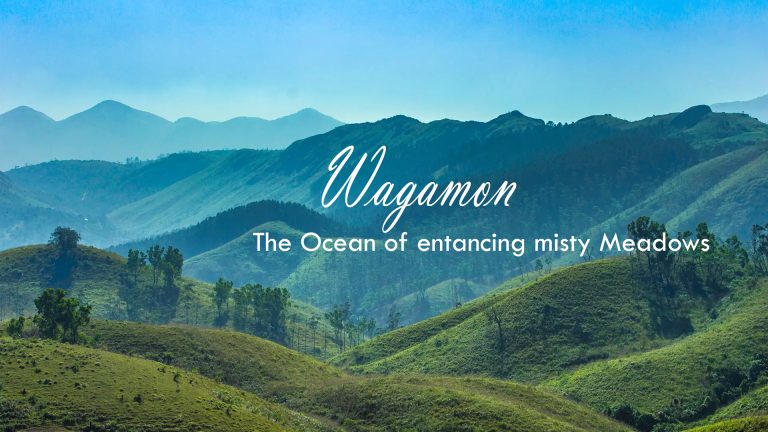
The regions in the east and northeast form part of the Western Ghats, an area well-suited for cultivating major cash crops such as rubber, tea, cardamom, and other spices. Valuable timber trees like teak and rosewood also thrive here. The Ghats maintain an average elevation of about 2,671 ft, and within this range lies Agasthyarkoodam — the district’s most prominent peak and the second-highest in the Western Ghats — rising to 6,132 ft above sea level. The forests at the southern end of these Ghats harbor one of the most diverse and least-explored ecosystems in Peninsular India. Between the highlands and the coastal lowlands stretches the midland region, characterized by rolling hills and valleys. This area supports intensive agriculture, producing crops such as paddy, tapioca, rubber, eucalyptus, spices, and cashew. The lowlands, though relatively narrow, consist of river valleys, deltas, and coastal stretches densely lined with coconut palms. Water bodies cover approximately 55.25 km² (21.3 sq mi), while the total forest area extends over about 498.61 km² (193 sq mi).
Thiruvananthapuram encompasses a reserve forest area of 495.1 km² (191 sq mi) and an additional 3.534 km² (1.4 sq mi) of vested forest land. These forests are distributed across three major ranges — Kulathupuzha in the north, Palode in the central region, and Paruthipalli in the south. The forests can be broadly categorized into three types: Southern Tropical Wet Evergreen Forests, Southern Tropical Semi-Evergreen Forests, and Southern Tropical Moist Deciduous Forests. Various social forestry initiatives are being carried out under the World Bank-assisted Kerala Social Forestry Project, along with the National Rural Employment Programme (NREP) and Rural Fuelwood Schemes, aimed at supporting small and marginal farmers through sustainable forest development.
Several Miyawaki forest projects have been established in Thiruvananthapuram. The Miyawaki method, developed by Japanese botanist Akira Miyawaki, is an innovative approach that accelerates forest growth by planting native species densely together. This technique results in rich, biodiverse forests that mature far more quickly than those grown using conventional methods.

Rivers
Thiruvananthapuram is home to 3 main rivers. The Neyyar River, stretching about 35 miles, is the southernmost river of Kerala and originates from Agasthyamala, the second-highest peak in the Western Ghats. The Karamana River, which runs for about 42 miles, begins at Vazhuvanthol, another mountain in the same range. The Vamanapuram River has its source at Chemunji Mottai in the Western Ghats.

The district also features ten major backwaters, with prominent lakes including Veli, Kadinamkulam, Anjengo, Kaappil, Akathumuri, and Edava-Nadayara. In addition, the freshwater Vellayani Lake, located in Thiruvananthapuram taluk, holds great potential to serve as a major water source for the city in the future.
History
Thiruvananthapuram, though a relatively modern region today, has trading roots that trace back to around 1000 BC. It is believed that ships belonging to the Israeli King Solomon once docked at a port called Ophir — identified by some historians as present-day Poovar — around 1036 BC. According to the Bible, Ophir was a source of precious goods such as gold, silver, ivory, gemstones, and almug (sandalwood) wood, which were brought to King Solomon after a three-year voyage.
Ophir is mentioned in the Christain Religious Books; in Genesis 10:29 as a descendant of Joktan and as a region famed for its fine gold, particularly in relation to King Solomon’s fleet. Several passages — including 1 Kings 9:28, 1 Kings 10:11, Job 28:16, Psalm 45:9, and Isaiah 13:12 — use the phrase “gold of Ophir” to signify exceptional purity and value.
While the exact location of Ophir remains uncertain, scholars have variously associated it with southern Arabia, East Africa, or India. The ancient port was an important trading center for commodities like spices, sandalwood, and ivory, highlighting Thiruvananthapuram’s long-standing role in global maritime trade.

The southern part of present-day Kerala, especially the coastal region between Thiruvananthapuram and Alappuzha, was historically ruled by the Ay dynasty. Existing from the early centuries BC until around the 10th century AD, the Ay dynasty had close connections with the Pandya dynasty of Madurai. Some studies suggest that the Nadar or Nadalvar community of Tamil Nadu may be descendants of the ancient Pandya rulers; the Nadars belong to an ancient Tamil Dravidian community known as the Villavars. Today, Nadar community is the most populated community in Thiruvananthapuram district, most of them are SIUC and Latin Catholic Nadar Christians. The early rulers of Thiruvananthapuram belonged to the Ay lineage, with Vizhinjam — now part of modern Thiruvananthapuram — serving as their capital. Vizhinjam functioned as an important port city as early as the 2nd century BC. During the Ay dynasty’s rule, the region witnessed several conflicts as both the Chola and Pandya dynasties attempted to capture this strategic port.
After the death of King Vikramaditya Varaguna in 925 AD, the Ay dynasty’s power declined, and most of their territories became part of the Chera dynasty. During the 10th century AD, the Cholas attacked and sacked Vizhinjam and surrounding areas, destroying the port and the historic education center, Kanthalloor Sala. A branch of the Ay family, which controlled the Padmanabhaswamy Temple, later merged with the Kingdom of Venad in the 12th century AD. Present-day Thiruvananthapuram, its district, and Kanyakumari were part of the Ay kingdom, which faced repeated Chola and Pandya invasions. The kingdom eventually became part of Venad, later expanding into the powerful Travancore state in the 18th century AD. The Padmanabhaswamy Temple reflects distinct Tamil-Dravidian architectural features, setting it apart from temples in northern and central Kerala.
In 1578 AD, during the Portuguese era, Thambiran Vanakkam was printed at Kollam, the capital of Venad, marking the first book printed in any Indian language. At the time, Tamil (Lingua Malabar Tamul) was widely used, and present-day place names, dialects, and customs in Kerala still reflect Tamil heritage. In the early 18th century AD, the Travancore royal family incorporated members from the Kolathunadu family of Kannur. Marthanda Varma, inheriting Venad, expanded the kingdom by conquering neighboring regions and founded the princely state of Thiruvithamkoor in 1729 AD, making Thiruvananthapuram its capital in 1795 AD. Under his reign, the city became a cultural hub, attracting artists and scholars. Marthanda Varma patronized temple arts such as Koothu, Padhakam, Kathakali, Thullal, and Koodiyattam, with poets like Ramapurathu Warrier and Kunchan Nambiar serving in his court. Travancore became the dominant state in Kerala after defeating the Zamorin of Kozhikode in 1755 AD.

The original publication consisted of 16 pages, with the first 8 pages printed using types prepared in Kollam in 1577, and the remaining pages printed the following year using corrected types. The Portuguese referred to Tamil as “Lingua Malabar Tamul” at that time. A copy of this historic book is preserved in the Harvard University Library, reflecting its significance in both literary and cultural history.
Thiruvananthapuram flourished as an intellectual and artistic center during the 19th century under Maharajas Swathi Thirunal and Ayilyam Thirunal. Key institutions established included the first English school (1834 AD), Observatory (1837 AD), General Hospital (1839 AD), University College (1873 AD), and the Oriental Research Institute & Manuscripts Library. Moolam Thirunal (1885–1924 AD) founded Sanskrit, Ayurveda, and Law colleges, along with a women’s college. The Thiruvananthapuram Municipality was formed in 1920 AD and became a corporation in 1940 AD under Chitra Thirunal Bala Rama Varma. Social reforms like the Temple Entry Proclamation (1936 AD) and the founding of the University of Travancore (1937 AD) further shaped the city.
After India’s independence in 1947 AD, Travancore joined the Indian Union. The first elected ministry, led by Pattom Thanu Pillai, took office in 1948 AD. In 1949 AD, Thiruvananthapuram became the capital of Thiru-Kochi, formed by merging Travancore and Kochi, with Chitra Thirunal serving as Rajpramukh. When Kerala state was created on 1 November 1956 AD, Thiruvananthapuram became its capital.
Establishments
1873 – University College, Thiruvananthapuram
University College was established in 1873, laying the foundation for higher education in the region. It became a center for arts, science, and research, attracting scholars and students from across Kerala.
1962 – Thumba Equatorial Rocket Launching Station (TERLS)
The Thumba Equatorial Rocket Launching Station was set up in 1962, marking the beginning of India’s space program. Its location near the magnetic equator made it ideal for launching sounding rockets and conducting space research.
1963 – Vikram Sarabhai Space Centre (VSSC)
In 1963, the Vikram Sarabhai Space Centre was established on the outskirts of Thiruvananthapuram. It was responsible for developing and launching India’s first indigenous rockets and remains a key ISRO center today.
1976 – Sree Chitra Tirunal Institute for Medical Sciences and Technology (SCTIMST)
SCTIMST, established in 1976, is a premier biomedical research and medical institute focusing on cardiovascular technology, biomedical devices, and clinical services.
1983 – Rajiv Gandhi Centre for Biotechnology (RGCB)
The Rajiv Gandhi Centre for Biotechnology was founded to advance research in molecular biology, genetics, and biotechnology. It has become a key hub for national and international collaborative projects.
1995 – Technopark
Technopark, India’s first IT park, was inaugurated in 1995. Today, it hosts over 450 companies and employs around 62,000 professionals, making Thiruvananthapuram a leading IT and innovation hub.
2007 – Indian Institute of Space Science and Technology (IIST)
The Indian Institute of Space Science and Technology was established in 2007 to train scientists and engineers specifically for India’s space missions, further strengthening the city’s role in space research.
The Renaissance of Travancore
When the Missionaries came to Travancore they turned first to become social reformers rather than Gospel preachers.
Christian missionaries played a major role in the social reformation of Travancore during the early 19th century. At that time, women belonging to backward communities, particularly the Nadar community, were not allowed to cover their upper bodies. To challenge this oppressive practice, missionaries of the London Missionary Society (LMS) intervened and designed a modest garment called the roukka for these women to wear.
The upper-class rulers strongly opposed this change. In the mid-19th century, they carried out a brutal display of caste-based power, forcing 100 Nadar girls to parade naked along what is now Kumarapuram Road, near the Medical College in Thiruvananthapuram. When LMS missionary William Ringel Taube, active in the 1840s–1850s, learned of this atrocity, he fought against the caste-based violence in Travancore. Under his leadership, the LMS missionaries championed the upliftment of the Nadar and other marginalized communities, advocating for both social and political rights, folowing this event, a serious Rebellion followed in the Neyyattinkara region during the mid-19th century, where Nadar men, led by Ringel Taube, fought to gain political representation. LMS had diplomatic support from the Brittain. Though several Nadar men lost their lives in the conflict, the community eventually secured political power. From that time onward, a reserved seat was provided for the Nadar community in legislative elections, ensuring their participation in governance. Many Nadars, inspired by the missionaries’ support, converted to Christianity and were baptized, becoming part of the Church of South India (CSI). But today there is no such Seat Reservation for SIUC Christians in the Assembly Elections.

In addition to social reforms, LMS missionaries revolutionized education in Travancore. Before their intervention, the Gurukul system, prevalent until the mid-19th century, allowed only upper-class children to receive formal education. Backward caste children were denied access, and in some cases, strict punitive measures were enforced by the Upper Class rulers, such as Lead (Eeyam in Mlayalam) being poured inside the Ear of backward caste children, if they attempted to listen to Vedic teachings. The LMS missionaries opened modern, Western, and scientific education to all, irrespective of caste, gender, or social background. This gave generations of Nadars and other marginalized communities access to knowledge, literacy, and social mobility that had previously been denied.
The legacy of LMS missionaries such as William Ringel Taube remains significant in promoting social justice, education, and empowerment for marginalized communities in Travancore.
Read the detailed article here: “The Social and Educational Impact of Christian Missionaries in Travancore”
Economy
Thiruvananthapuram’s economy is driven by IT, Education, Plantations, Aerospace, Commerce, and Tourism. The district contributes 10.31% of Kerala’s GDP and, with an economic growth rate of 13.83%, is the fastest-growing district in the state. A study by the global financial services firm Morgan Stanley ranked Thiruvananthapuram among the top ten cities in India on the Vibrancy and Consumption Index.
Thiruvananthapuram is home to several prominent industrial and manufacturing enterprises, including HLL Lifecare Limited, Travancore Titanium Products, Kerala Automobiles Limited, Trivandrum Rubber Works, Keltron, Milma, and English Indian Clays. These companies contribute significantly to the district’s industrial output and employment.
Information Technology & Technopark
Thiruvananthapuram is a major IT and IT-enabled services (ITES) hub in India, contributing approximately 40–45% of Kerala’s total software exports. The city hosts a range of multinational technology companies, including Oracle Corporation, HCL Technologies, Infosys, Tata Consultancy Services, Accenture, Nissan, Allianz Technology, Envestnet, UST Global, Ernst & Young, Flytxt, Guidehouse, Tata Elxsi, McKinsey & Company, RR Donnelley, and Quest Global.
At the heart of the city’s IT ecosystem is Technopark, India’s largest IT park in terms of built-up area. Technopark provides the largest employment base for IT/ITES professionals in Kerala, accommodating around 52,000 employees across nearly 400 companies. It was established on July 28, 1990, as an autonomous organization fully owned by the Government of Kerala. It was founded under the leadership of then Chief Minister E.K. Nayanar of the Communist Party of India, with the goal of creating a hub for the information technology (IT) industry and promoting economic development in the state.

In addition to Technopark, Thiruvananthapuram houses several other IT, media, and industrial campuses, such as Kinfra Film and Video Park, Kinfra Apparel Park, B-HUB, and Chithranjali Film Complex. Major upcoming and specialized campuses include Technocity, Bio 360 Life Sciences Park, and Digital Science Park, which focus on IT, biotechnology, and industrial innovation, further strengthening the city’s position as a hub for technology and research.

Digital University (The Kerala University of Digital Sciences, Innovation and Technology [DUK]), established in 2020, focuses on technology-driven learning, research, and IT skill development. As an innovation hub, it builds a tech-savvy workforce, and aims to be a leader in digital education.
Trivandrum International Airport
Thiruvananthapuram International Airport serves Kerala’s capital and is the first airport in the state, established in 1932. It became India’s fifth international airport in 1991. The airport has two terminals: Terminal 1 handles domestic flights, while Terminal 2 is dedicated to international operations. In Q2 FY24, the airport division reported revenues of ₹1,905.47 crore, up from ₹1,292.26 crore in Q2 FY23, reflecting strong growth in passenger and cargo traffic. In 2024, Thiruvananthapuram Airport handled 4.4 million passengers inbetween March 23 and April 24.

Vizhinjam International Sea Port
Vizhinjam International Seaport is India’s first deep-water transshipment port, strategically located just 10–12 nautical miles from the busy Persian Gulf–Malacca shipping lane. Its natural depth of 18–20 metres allows it to accommodate massive container ships, and the berths are designed for vessels of up to 24,000 TEU. The project was significantly promoted during the tenure of the Oommen Chandy-led Congress government in Kerala, and the port’s operations are now under Adani Group, which has taken over its development and management to position it as a major hub for international shipping.

Future plans:
A new 10.7 km underground railway line, being constructed by Konkan Railway, will link Vizhinjam Port to the national network at Balaramapuram. Featuring a 9.43 km tunnel, the ₹1,482-crore project, expected by December 2028, will enable freight and container transport along the Thiruvananthapuram–Kanyakumari route.
The port is looking to use the city airport, located just 16km away, for transshipment when gateway cargo operations begin. The integration is expected to be streamlined since both the port and the airport are managed by the Adani Group. The port is also strategically located less than 1-2km from NH- 66.
Tourism
Tourism is a key contributor to the economy, drawing visitors with natural attractions such as beaches, backwaters, hills, and plantations, as well as cultural and wellness offerings including heritage sites, historical landmarks, Ayurveda, medical tourism, and educational centers.
Tourist Attractions
The content is updating soon…
Hi, this is a comment.
To get started with moderating, editing, and deleting comments, please visit the Comments screen in the dashboard.
Commenter avatars come from Gravatar.